How to Remove Oxidation
from a Boat Hull in Perth
Perth's UV index 11+ and Indian Ocean salt air are the harshest combination in Australia for boat gelcoat. Here's how oxidation happens, how bad yours is, and what it takes to fix it.
📅 May 2026
📍 Perth WA
🕒 6 min read
✍️ Foam on Wheels Boat Detailing
If your boat's hull looks chalky, faded or has lost its depth of colour, it's oxidised. Oxidation is the single most common boat maintenance issue in Perth — and it's almost entirely caused by our unique combination of extreme UV and salt air exposure. The good news: most oxidation is fully reversible with the right technique and products.
This guide covers everything Perth boat owners need to know about hull oxidation — what causes it, how to assess the damage, and what it takes to restore your gelcoat to a deep, wet-looking shine.
What Is Boat Hull Oxidation?
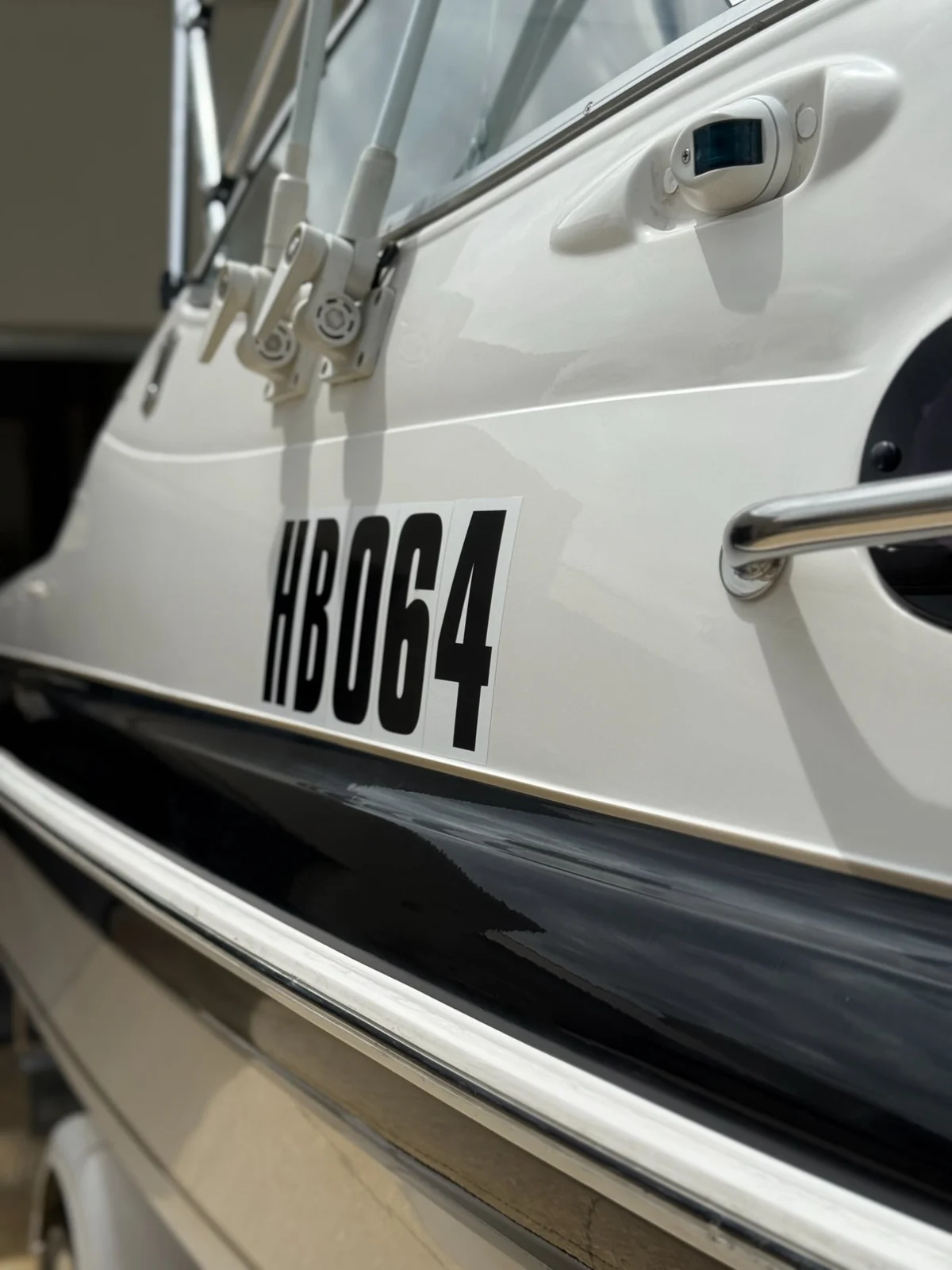
Gelcoat is the outer layer of a fibreglass boat hull — a thin, pigmented resin applied over the fibreglass. When exposed to UV radiation and oxygen, the resin molecules in gelcoat break down over time. This process is called oxidation, and it causes the surface to turn chalky, lose its gloss and eventually become porous.
In Perth, oxidation happens faster than almost anywhere else in Australia because of our UV index — which regularly hits 11+ in summer, classified as "extreme" by the Bureau of Meteorology. Combined with the salt air from the Indian Ocean and Cockburn Sound, Perth boat gelcoat degrades significantly faster than in most other Australian cities.
💡 Perth fact: A fibreglass boat stored outdoors in Perth with no protection can show visible oxidation within a single summer season. In Melbourne or Sydney, the same boat might take 2–3 years to show the same level of degradation.
The 3 Stages of Gelcoat Oxidation
1
Light Oxidation
Surface looks slightly dull, less glossy than new. Gelcoat still smooth to touch. Wipe with a damp cloth — if gloss temporarily returns, it's light oxidation. Fix: Single-stage machine polish.
2
Medium Oxidation
Clearly chalky and faded. White chalky residue on cloth when wiped. Surface may feel slightly rough. Gelcoat starting to become porous. Fix: Compound cut followed by finishing polish.
3
Heavy Oxidation
Deeply chalky, heavily faded, rough texture. Gelcoat is porous and absorbing contamination. May have stress cracks. Fix: Aggressive compound, multi-stage machine correction. Repaint if through-oxidised.
Can You Remove Boat Hull Oxidation Yourself?
For light oxidation, yes — a good quality marine compound applied by hand or with a dual-action polisher can restore gloss. Products like Meguiar's Marine Oxidation Remover or 3M Marine Compound are widely available at Repco or Bunnings and work well for light cases on small boats.
The DIY Limitations
Hand polishing is extremely labour-intensive and rarely achieves the depth of gloss that machine polishing does. On anything larger than a 4m tinnie, hand polishing a full hull is a day's work with modest results.
For medium to heavy oxidation, you really need a rotary or dual-action machine polisher with the right marine compounds and pads — and the technique to use them without burning through the gelcoat. Gelcoat is thin (typically 0.5mm). One wrong pass with a rotary polisher and you're through to the fibreglass.
⚠️ Warning: Never use car polishing compounds on a boat hull. Car products are formulated for clear coat, not gelcoat. They can seal oxidation into the surface rather than removing it, making professional restoration harder and more expensive later.
Professional Hull Oxidation Removal in Perth
Professional gelcoat restoration uses a multi-stage machine polishing process — starting with a cut compound to remove the oxidised layer, followed by a finishing polish to refine the surface and restore depth. At Foam on Wheels, we use marine-specific compounds and pads matched to the level of oxidation and the gelcoat type.
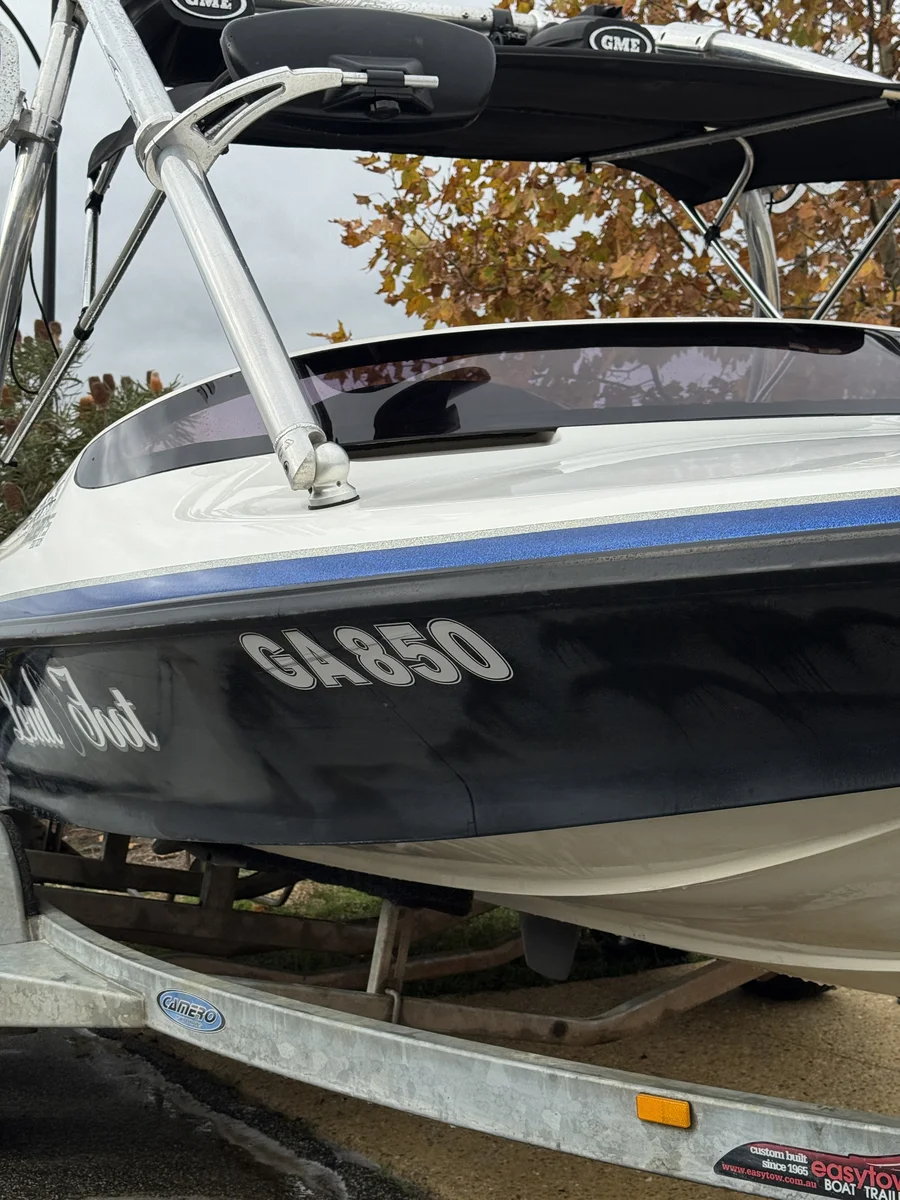
Before
After
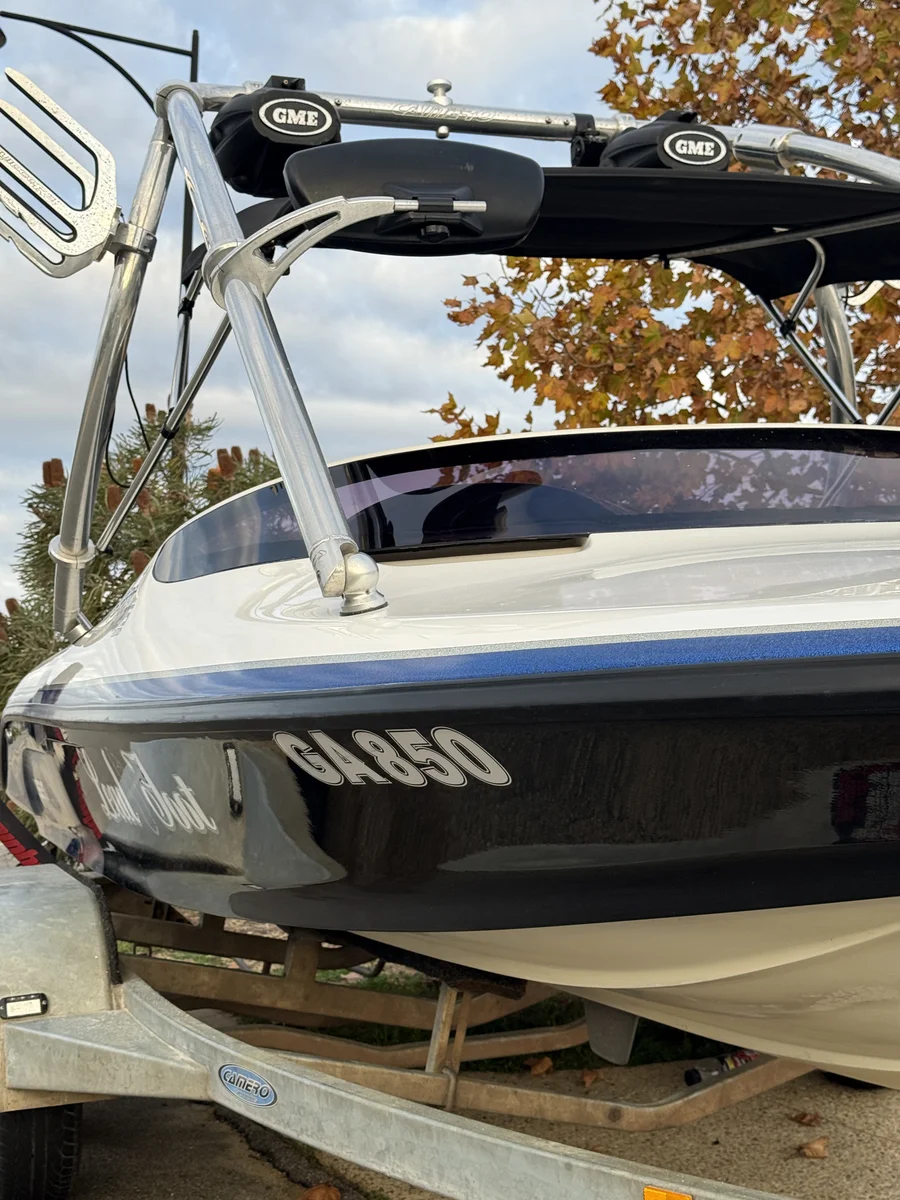
Real Perth job — black gelcoat restored from dull and swirled to mirror finish with multi-stage machine correction.
What the Process Involves
- Wash and decontamination — remove salt, algae and surface contamination before polishing
- Oxidation assessment — identify the severity and any areas needing extra attention
- Compound stage — machine polish with a cutting compound to remove the oxidised gelcoat layer
- Polish stage — finishing polish to refine swirl marks left by the compound and restore gloss depth
- Protection — wax, sealant or ceramic coating to protect the restored gelcoat from re-oxidising
The result is a deep, wet-looking mirror finish that looks like the boat did when it left the factory — or better.
How Long Does It Take?
For a typical 5–6m fibreglass boat with medium oxidation, expect 4–6 hours for a full hull polish. Heavily oxidised boats, larger vessels, or those requiring multiple compound passes take longer. We quote per-job after inspecting your vessel — never by the clock.
How to Prevent Oxidation Coming Back
Restoring oxidised gelcoat is only half the job — without protection, Perth's UV will start the process again within months. The best defence against re-oxidation, in order of effectiveness:
- Graphene ceramic coating — permanent UV blocker bonded to the gelcoat. The most effective long-term protection available. Lasts 5+ years. Learn more about graphene ceramic coating →
- Marine sealant or wax — temporary protection, needs reapplying every 3–6 months. Better than nothing but significant maintenance.
- Boat cover or undercover storage — keeps UV off the hull entirely. Most effective combined with a coating.
- Annual professional detail — catching light oxidation early prevents it progressing to medium or heavy, which is far more expensive to fix.
💡 Perth tip: If your boat is stored outdoors on a trailer or in a driveway, a graphene ceramic coating is the single best investment you can make. Perth's UV is so intense that even a boat cover will only slow oxidation — a ceramic coating blocks it at the surface level.
Hull Oxidation Removal Cost in Perth
Professional hull polish and oxidation removal in Perth typically costs:
- Small tinnie / runabout (up to 4m): $200–$350
- Medium bowrider / half-cabin (4–6m): $350–$600
- Large cruiser / cabin boat (6–8m+): $600–$1,200+
Heavily oxidised boats that require multiple compound passes, or boats that haven't been detailed in many years, will be at the higher end. We always inspect and quote before starting — no surprises. See our full boat detailing cost guide for Perth →
Mobile Hull Oxidation Removal Across Perth
Foam on Wheels provides mobile hull oxidation removal across all Perth suburbs — Cockburn, Fremantle, Hillarys, Mandurah, Rockingham, Mindarie, Joondalup and everywhere in between. We come to your marina berth, boat ramp or home driveway fully equipped. You need tap water and a power point — we bring everything else.
We're fully insured with $10M Marine Industry Liability (AXA XL) — your vessel is protected while in our care.
Get a Free Oxidation Removal Quote
Tell us about your vessel and we'll provide a free, no-obligation quote. We come to you anywhere across Perth.
Get a Free Quote
Call 0477 705 916
Related Articles